

After 14 years of Conservative leadership, the UK came under the control of the Labour Party again, reclaiming power after Prime Minister Keir Starmer won the party’s six-week election campaign to control Parliament. Starmer’s appointment and Labour’s win come at a time of dwindling support for left-leaning parties in Europe, where many governments are witnessing far-right surges.
Now, operating under a constrained budget in the aftermath of COVID and the economic downturn that haunted his predecessors, Starmer and Labour are under pressure to prove Britain’s party switch was worth it. Ultimately, their win was a result of two factors: Labour’s political shift toward electable centrist policies and the recent string of weak Conservative prime ministers. The combination was deadly for the Conservative Party and created the ideal circumstances for Labour’s win. However, upon examining the rhetoric and policy of Labour in recent years, both before and after the election, the party’s victory is much more complex than it initially appears.
On the surface, Labour’s triumph assuages fears that far-right sentiments could take broader hold in the UK as they have in much of Europe. However, given Starmer’s strategic approach, which began as he worked under former Labour leader Jeremy Corbyn, the recent electoral win represents an ideological loss for progressive politics. Under Starmer, the party’s shift has diluted its values and demonstrates how the far-right’s rise is pulling even center-left parties rightward in pursuit of perceived electability. Labour’s work may have paid off in the recent win, but the costs of such a turn are quickly approaching as the party continues to prioritize a neoliberal, business-first agenda over the needs of its people.
Yet, on the surface, Labour’s policies appear as a fresh start from the era of chaotic Conservative rule that helped pave the way for Labour’s win. Starmer’s rise was, in part, a response to the erratic and unstable governance that plagued the Conservatives under the leadership of the previous three Prime Ministers — Boris Johnson, Liz Truss, and Rishi Sunak.
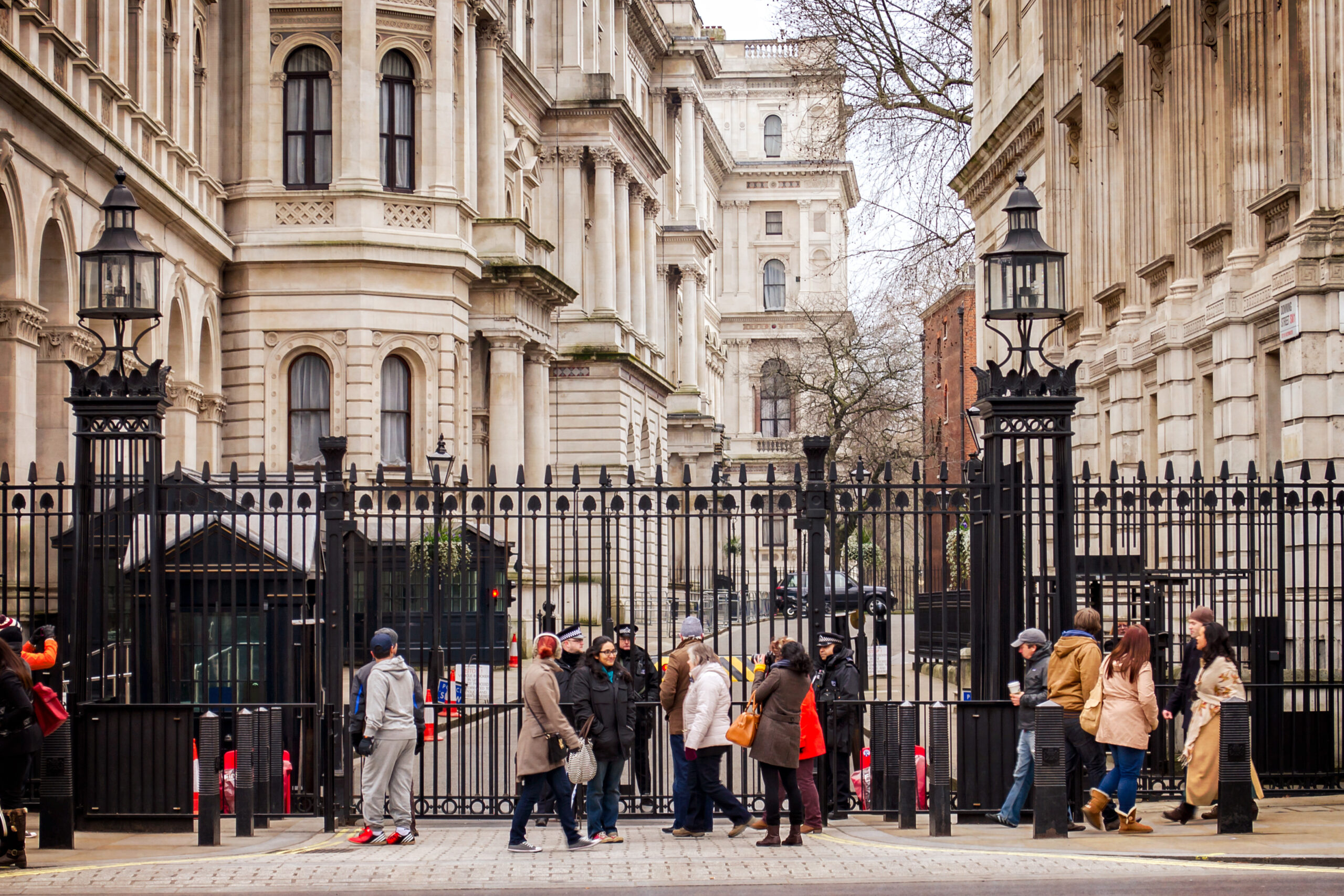
Johnson, for his part, embroiled the party in scandals and poor economic policy, further compounded by an already faltering COVID-era economy. The downturn commenced soon after Johnson took office in 2019, as he incurred fines for violating lockdown regulations by throwing parties at 10 Downing Street. Sunak, then the Chancellor of the Exchequer, was fined as well.
A subsequent series of corruption scandals involving sexual misconduct by an appointed employee and support for a member of Parliament involved in lobbying further eroded Johnson’s credibility. Eventually, even his most loyal Conservative electorate turned after he relentlessly championed Brexit. Despite Brexiter promises, the economy continued to suffer, and Northern Irish parties reignited their criticism of the move to leave the EU, sowing deeper distrust for the Conservative Party.
Exacerbating that distrust, Johnson’s successor, Liz Truss, plunged the party into full-blown financial chaos, miring the party in economic policies so damaging that economist Dario Perkins deemed bloated bond yields a “moron risk premium.” Inflation reached 11% in October 2022, and Truss’s credibility collapsed just as quickly as the economy. She left office the same month — just 50 days after her ascension to prime minister.
The economy remained the unshakable sticking point for the Conservatives under Rishi Sunak. The effects of Truss’s policies spiraled beyond his control, even as he sought to stabilize inflation by reversing the tax cuts and improving UK-EU relations with the Windsor Framework, a joint effort to introduce new trade regulations in Northern Ireland. Yet, the effects of COVID-19, including continuing wage claims promised to furlough workers, hindered further economic recovery. Interest rates and the cost of living weighed heavily on the public, further damaging Sunak’s reputation. Despite his efforts, continued economic challenges, coupled with the persistent aftershocks of the pandemic, cast a poor light on the Conservatives and a much more generous one on Labour — one that Starmer had already been capitalizing on under Corbyn, then as leader of the party, and now as Prime Minister.
Seeing the failures of Labour over 14 years to secure a victory under Corbyn, Starmer was determined to shift the party toward the center, remolding Labour into what it is today. Unfortunately, in his pursuit of electability, Starmer has cowed to conservative ideology and policy on several fronts, hollowing Labour’s victory in what might have represented a defeat of right-wing power.
Economically, Starmer’s policy favors business, despite the party’s pervasive pro-worker rhetoric. He abandoned Corbyn’s plan to renationalize British energy, scaled back Labour’s original 28 billion pound climate plan, and continued consorting with big business. Such commitment to opening up room for unbridled investment has risked further alienating Labour’s working-class base, though its “New Deal for Working People” — offering measures like universal sick pay — distracts from the party’s more unpopular moves.
Overall, Labour’s move toward austerity does little to support a pro-working-class platform. Doubling down on the party’s decidedly neoliberal policies, Chancellor of the Exchequer Rachel Reeves announced plans to drastically cut public spending by five billion pounds, mainly in the form of disability payments and housing benefits, even as the Joseph Rowntree Foundation (JRF) reported to her that “living standards for all UK families are set to fall by 2030.” Such measures reflect Labour’s deepening commitment to neoliberal policies as it prioritizes business interests and economic growth over the well-being of the broader populace.
Still, Labour’s embrace of neoliberal objectives extends beyond economic policy. The party, once criticized for lacking patriotism and overlooking national security, has pivoted sharply under Starmer. While Corbyn drew significant backlash for suggesting he would prefer NATO “ultimately disbanded,” Starmer has made military investment and national security key pillars of Labour’s platform. During his campaign, he promised to increase spending on the military and lauded economic, border, and national security as “the bedrock” that Labour’s “manifesto” relies on, echoing traditional conservative talking points.
Nowhere is this neoliberal shift more apparent than in Labour’s hardline stance on the border security issue. The party published ads boasting about deportation numbers that echoed the far-right Reform Party’s branding and messaging in attempts to retain votes more vulnerable to right-wing parties. Instead, Labour is merely blurring the line between itself and the right and failing to gain votes in the process, as evidence shows that shifting to the center does not help left-leaning parties grow their base. Even more recently, Starmer has exacerbated the new stance, warning that Britain would become an “island of strangers” without proper immigration control, once again echoing the fearmongering tactics employed by the far right. Parroting such ideology in any respect is hardly a win for progressive politics.
The Labour leader also aligned his party with the Conservatives on the genocide in Gaza. Since the election, the party has avoided producing a legible view on the matter, issuing an endless stream of contradictory decisions and statements. While it supported Israel early on, Labour seemed amenable to change as it called on the Conservatives to publish legal advice on arms sales before the election. It also withdrew the Conservatives’ objection to the ICC arrest warrants against Israeli officials perpetrating the destruction.
Yet Labour’s subsequent actions have been anything but decisive. It partially banned arms sales to Israel but quickly downplayed the decision by abstaining from condemning the continued illegal Israeli settlements in Gaza and the West Bank during a UN vote. Meanwhile, the Royal Air Force has continued daily surveillance flights over Gaza, providing intelligence to Israel. Starmer has since reaffirmed that the UK will “stand with Israel,” as Foreign Secretary David Lammy outright denied that the devastation in Gaza constituted a genocide.
These policies suggest that in its success in finally unseating Conservative rule, Labour has compromised any commitment to the progressive ideology it still claims to uphold. This shift is not without precedent — Labour leader Tony Blair similarly distanced the party from its union roots and championed business-friendly policies in the 1990s to bolster election outcomes. Nonetheless, Starmer’s platform reflects a broader and more troubling trend — the continued dilution of left-leaning parties across the West as they pursue power in the face of far-right parties.
Ultimately, while the simultaneous repositioning of the Labour Party and the failures of the Conservatives created a perfect recipe for Starmer’s success, they have seriously damaged the credibility of a party that claims to champion progressive policies. Instead, its decidedly neoliberal priorities have undermined the meaning of this victory and fundamentally sabotaged the chance for any sustainable, truly progressive action from Labour in the foreseeable future. The immediate cost of such a move is apparent; the long-term cost to Britain remains to be seen.

Associate Culture Editor