
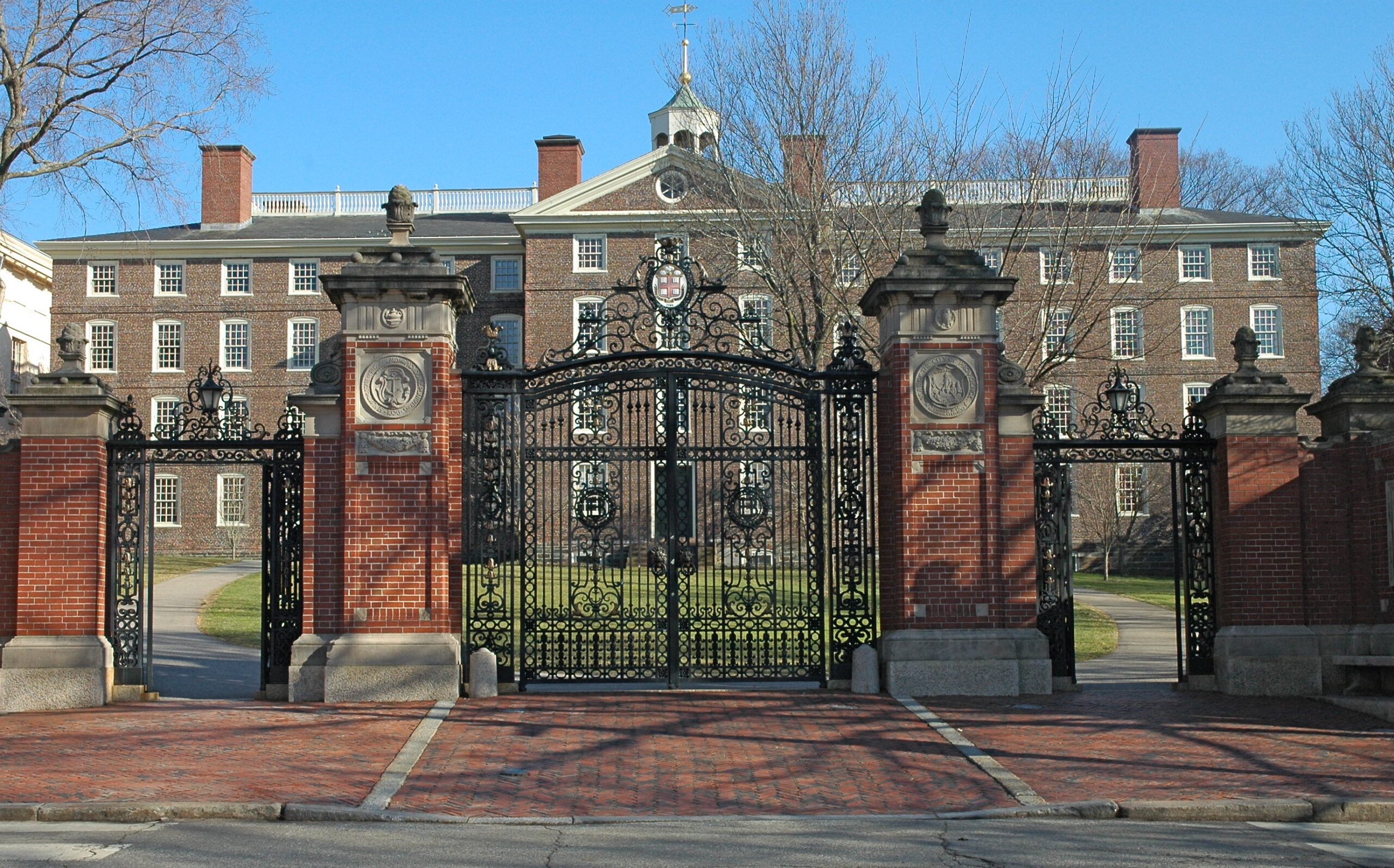
On Saturday, a mass shooting at Brown University left two students dead and nine others critically injured by gunfire. Brown, a fellow Ivy League school just over an hour away from Cambridge, spent the night under a shelter-in-place order as its students huddled in their dorms in fear. Like so many other American communities, Providence, Rhode Island is now shattered by senseless violence.
Police are currently on the hunt for a suspect. As the search unfolds, a series of events we have grown all too familiar with will likely ensue: police will release the suspected shooter’s name and image. Extensive news coverage will follow, providing extensive detail on the person’s life story, personality, and known motives. Even as public attention fades, the stories will proliferate for days, months, or even years.
I have seen this all-too-familiar pattern play out after mass shootings in Las Vegas, Parkland, and Oxford, to name only a few. It is a formula built to keep us glued to our screens. It is also a practice which can carry devastating public safety consequences.
While acknowledging that sensationalization in the media is not the sole contributing factor to the perpetuation of mass shootings — and that there are many more upstream risk factors — we need to consider the role it plays in encouraging other incidents. According to existing research, this type of reporting inadvertently serves as a vector for imitation and fame-seeking. One study finds that mass shootings are followed by a period of roughly two weeks in which the likelihood of another tragedy increases. In a nation where a mass shooting occurs roughly every two days, these short-term spikes push a nation at its breaking point into even further despair.
Following the murder of their son, Alex, and 11 others in the 2012 mass shooting at an Aurora, Colorado movie theater, Tom and Caren Teves established No Notoriety. The organization asks media outlets to adhere to the well-known journalistic principle to “minimize harm” in the wake of a mass shooting. In practice, this entails prioritizing absolutely necessary public safety information, such as basic facts and the impact on the community, while exercising restraint with details like the shooter’s name. Minimizing harm does not mean withholding information when there is an ongoing threat to the community. For example, identifying a suspect may be necessary in preventing continued violence.
In addition to encouraging responsible journalistic reporting practices, the public must also uphold this standard. In an age when most have social media, everyone has the capacity to operate as their own reporter of information. Instead of sensationalizing, we can uplift the voices of those we have lost. The students killed by yesterday’s gunfire were real; they had dreams, livelihoods, and families. We can also share information from the many organizations and community leaders guiding the way on gun violence prevention. Only by sharing the necessary, helpful details will we be able to sustain focus on this issue even after the iron has cooled and the political attention has faded.
These practices can sustain pressure on elected officials to act. Instead of directing attention solely to the perpetrator — which lawmakers have historically used to shift blame away from themselves and the systems that allowed access to a deadly weapon — focusing on those who were lost results in an unignorable reality that cannot be deflected by appeals to individual culpability alone. Only then will we be able to expand focus beyond individual perpetrators and implement effective and evidence-informed gun violence prevention measures.
While increased news coverage will inevitably follow in the coming weeks after the tragedy at Brown University, the media must be willing to rethink the way it covers mass shootings before the next one occurs. It is a matter of public health and safety, and we all have a part to play in guaranteeing that our public spaces — our parks, schools, grocery stores, and places of worship — do not become the subject of the next breaking news headline.

Ethics Bureau Director, Senior Culture Editor