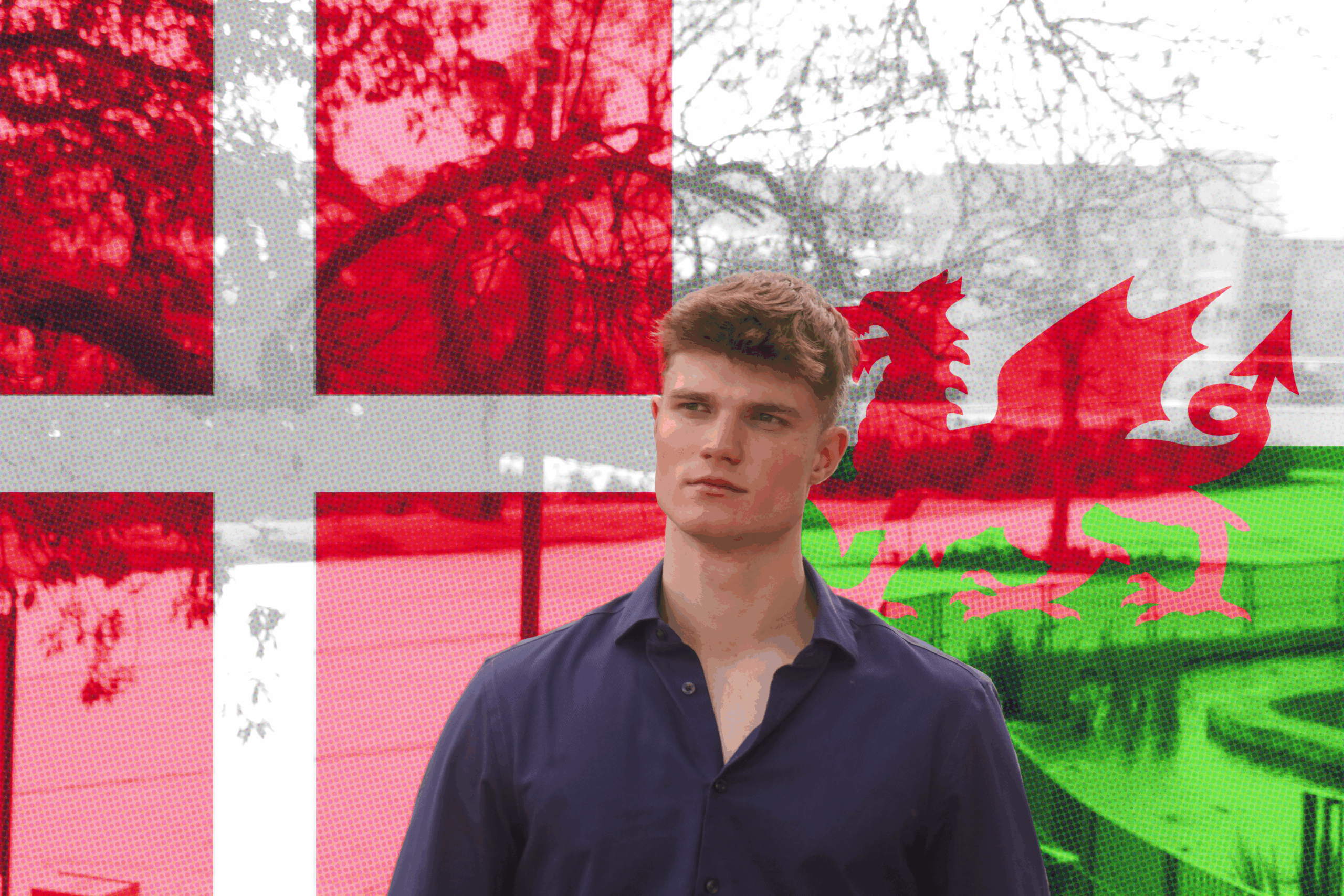
If there is one lesson I have learned over the past few years, it is to expect the unexpected. I never imagined I would be studying in the United States, let alone at Harvard. Even more surprising is finding myself fighting for international students, like myself, against an increasingly authoritarian administration.
On Aug. 20, 2024, my bags were packed and I was ready to depart for the United States to study at Harvard College — a place I had only dreamed of attending just a few years earlier. In the months leading up to my departure, my friends and family often joked about the political chaos brewing in the country. However, those comments remained just that: jokes. I never imagined the political situation would affect me, as I had intended to stay out of politics and activism. Before college, I had never participated in a protest and I believed that actively campaigning for change would only polarize opinions and hinder progress. I viewed protests as somewhat confrontational by nature, feeling they would alienate those who disagreed with me instead of inviting them into constructive dialogue.
After settling into my first semester, I had fallen in love with Harvard: the incredible classes, the beautiful campus, and most of all, the wonderful people. November came around, and with it, the 2024 U.S. presidential election. When the news of Donald Trump’s victory broke at the Harvard election watch party in Sanders Theatre, I watched as my friends broke down in tears. I was both confused and shocked by their seemingly dramatic reactions, as I had never witnessed such an emotional response to a political outcome back in the U.K. Unlike many of my peers, I quickly accepted the news and continued my studies, without pausing for a moment to think about how this outcome might affect those very studies.
When Trump began signing his wave of executive orders, a blatant attempt to consolidate his power and use immigrant and international communities as a scapegoat, I finally started to worry. My friends and I began having conversations about his actions that we had not had before, and we increasingly viewed many of his decisions as threats to American democracy. However, after these discussions, I would still promptly return to studying or joking around with my friends, convinced I would never be one of Trump’s targets.
On Apr. 16, 2025, an international student rushed up to me in tears, showing me a screenshot from a WhatsApp group. It was a photo of the letter from the Department of Homeland Security (DHS) that threatened to revoke Harvard’s ability to host international students if the university did not comply with DHS’s demands, including turning over “Any and all audio or video footage, in the possession of Harvard University, of any protest activity involving a nonimmigrant student on a Harvard University campus in the last five years.” I was now another target of his administration’s authoritarian actions; Trump’s relentless attacks had finally reached me, and this was no longer an issue I could shake my head at from a distance.
In the days that followed, I spent a considerable amount of time reflecting on the conflict between Harvard and the White House. International students like me found ourselves caught in the crossfire, with absolutely no control over the situation. I considered my previous complacency and was reminded of the poem “First They Came” by Pastor Martin Niemöller, which my Danish mother often recited to me as a child. The poem describes the silence of Germans like Niemöller in the face of the atrocities committed by Nazi Germany until the Nazis turned their attention to infringing upon rights and livelihoods of those who had remained silent. Ultimately, Niemöller himself became a target of the Nazis and was sent to a concentration camp. I realized I had made the same mistake; I had waited and watched the administration attack different groups until the attacks fell on my community — international students at Harvard.
During the Second World War, my grandmother was evacuated into the countryside, while my grandfather became the youngest soldier to hold the rank of captain in the British army in the fight against Nazi Germany. At the same time, my Danish great-grandparents both lived through the German occupation of Denmark.
They passed down their stories to my parents, who then passed them onto me. Each story carried the same message: Do not take democracy for granted, as it is something we must fight for everyday. My mother often reminded me that an autocratic regime does not require most people to be evil — it just needs most people to remain silent. The formula for the rise of authoritarianism is clear: Target one group at a time, exploiting the unwillingness of others to speak out for fear that they might be next. Eventually, it reaches our own community, and because every other group thought as we did, we are left to fend for ourselves. The erosion of democracy begins with fear, not force.
So, a few days after the letter from DHS in April, I decided to speak out at a rally organized by Harvard Students For Freedom, a student-group founded on opposing the Trump administration’s attacks on Harvard and its international students. It was not only my first protest, but my first time speaking at one. In my speech, I proclaimed that I should not have to fear speaking out against the administration in the United States—a country founded on freedom of speech. That we should not have to be afraid to voice our opinions. That we should not have to fear speaking up against the government. That we should not have to wonder whether the very constitution America was built on will protect us. Before the protest, I discussed my intention to speak at the protest with my parents, and they urged me not to speak out for fear of the repercussions. I reminded them that following their current advice would mean going against the values and lessons they had taught me when I was younger.
The fear of upsetting the Trump administration has kept most international students silent. Many stayed hidden in their dorms during the protests against the Trump administration’s attacks on Harvard. I mention this not to urge them to speak out as I have; I understand the risks are significant and dangerous. As a white British male, I recognize that the Trump administration is less intent on targeting me compared to some of my peers, and so I do not expect everyone in the international community to act without hesitation. Therefore, my call is directed more so at American citizens who have the ability to speak out. I want them to understand that the dehumanization and the assault on civil rights did not stop with “illegal” immigrants, nor will it end with international students at Harvard. The Trump administration is coming for our friends, our institutions, and our constitutional rights.
The targeting of international students and immigrants should be heard as America’s alarm bell. International students at Harvard like myself, largely remained silent until we were personally affected, at which point speaking out became dangerous. If international students are not safe today, then no one will be safe tomorrow. I urge us all to join protests, use our voices, and stand up to this administration. Because my story, along with countless others, is one that has been replayed throughout history. We all will watch an authoritarian government make its moves, waiting until it is finally our turn to suffer. I implore every American not to make the mistake that both myself and others have made. After all, authoritarianism rarely knocks on our door before it has first circled the neighborhood.