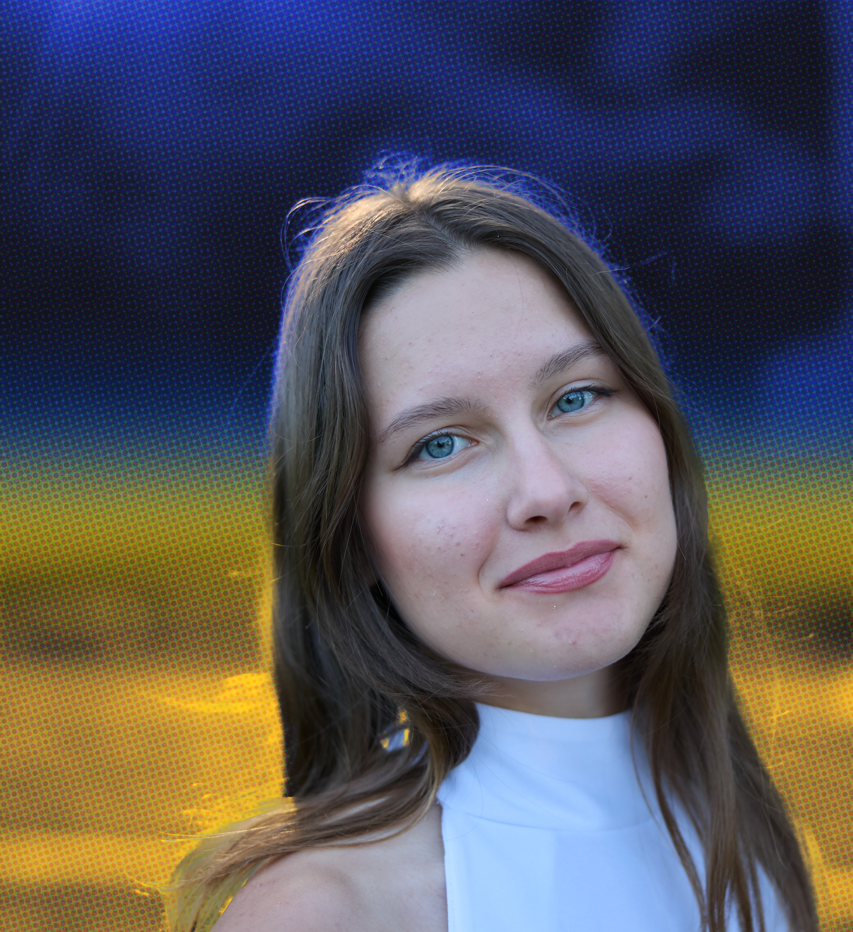
A citizen of no country. An individual with no rights. Overnight, these labels got branded onto me, taking away my legal recognition as a human being when the U.S. embassy took away both my passport and my U.S. visa for an indefinite amount of time following the new policies from the Trump administration. These dehumanizing classifications, echoing a dark past when people often suffered from lack of legality, were believed to have been left behind by the nations of the free world to build a promising future. Yet, they became my official statuses just a couple of months ago.
On May 21, I had an interview at the U.S. embassy in Warsaw — as all American embassies in Ukraine were shut down due to the Russian invasion — aiming to simply extend my ending visa during the next two days. However, 24 hours later, the Trump administration released its decision to ban Harvard international students from enrolling, forcing the embassy to take my passport and my other documents for an unexpected “administrative processing.” In other words, it was an investigation.
My passport was the only document I had proving my Ukrainian citizenship, and therefore, the only thing I could use to cross the Polish border or present to the local authorities. Therefore, I was in a situation where I would not be able to easily prove my identity or legality to Polish authorities without external help from the Ukrainian government, which could take days or weeks. As an international student lawfully attending Harvard University, I felt utter disbelief when I suddenly found myself stripped of my legal documents, unable to study in the U.S. or return home to Ukraine.
Without my documents, I became a figure without citizenship, legal protection, or belonging for an unknown period of time — simply because my institution “failed to abide by its legal obligations and ethical duties,” as stated in the Secretary of Education’s letter. The letter blamed the Harvard administration for violating federal law by abusing the privilege to enroll internationals. However, the Trump administration’s intrusion turned me and other international students into pawns of a political game and forcefully separated internationals from the rest of the student body. Staying in a foreign country without a chance to directly influence Harvard’s suing process and being tagged as “illegal” made me feel as though my democratic rights and freedom were being oppressed — rights and freedoms I was taught to cherish since I was a little girl.
I was born in Kyiv, Ukraine, to a family without a prestigious background but with a deep appreciation and respect for education. For the past four generations, the eldest daughter in my family has graduated from high school with the highest honors, even during wars or economic crises. As the eldest daughter, I felt the pressure of high expectations, but I let it fuel my appetite for learning.
Since I was a child, I have loved being challenged and absorbing as much knowledge as I could, following my ambitions of giving back to my family in the future and feeling freedoms extending beyond my legal rights. While my constitutional rights protected me as a citizen, my morals and beliefs guarded my identity and personal liberty. Freedom of developing an opinion, freedom of changing, and freedom of choosing — these freedoms became my definition of basic human rights.
At the beginning of 10th grade, I decided to challenge myself and apply to study abroad programs in the U.S., eventually earning a full scholarship to a boarding school. Fueled by a desire to protect Ukraine’s democracy, global justice, and basic human rights, I saw my educational journey in the U.S. as a privilege to learn from well-established American systems on how to preserve the freedom and integrity I value. Seeing the encouragement for inclusion and leadership in the “land of opportunity,” I became keen on the idea that I did not have to come from a privileged background to make a difference.
This belief pushed me to evaluate any adverse situation by either changing it or shifting my perspective about it, regardless of the challenge or issue. After Russia’s invasion of Ukraine, I initially felt powerless and afraid for my country’s independence. But observing the courage and moral strength of my fellow Ukrainians reinforced my steadfast values and confirmed that my beliefs can be the power that brings change. I chose to fight back using my education and not run away, regardless of the extreme circumstances, to protect my values of freedom I stand for.
I filmed a documentary showing Ukrainian realities behind the mainstream headlines, raised money for humanitarian aid through my performance art shows, and made a choice to pursue a career in international relations to reinforce the importance of freedom on a global scale. Such an approach gave me confidence that this democratic freedom of choice creates not only responsible citizens but also intelligent individuals capable of leading societies and enacting progress. Witnessing terrorism and genocide in my home country sharpened my sense of justice and pushed me to seek solutions to the complex issue of war outside of the bubble I have known.
With this liberty of self-expression, the American education system convinced me that our generation is truly capable of changing Ukraine’s reality and possibly the global future. I have always valued American encouragement for leadership, so when I got an opportunity to continue my academic path at Harvard, I was beyond grateful for this chance to learn shoulder-to-shoulder with future global changemakers. On campus, it felt as though I was advocating for various forms of justice and freedom in a place that shared my morals and supported my aspirations.
Yet my hopes were brought into question when, in an attempt at proving its authority, the Trump administration challenged Harvard’s protection policies for international students. On May 5, the Secretary of Education’s letter proclaimed that Harvard’s international “students” are dangerous and hateful and insisted that the university “instills grievance and racism into our wonderful young Americans.” Then the Harvard administration faced accusations from the Secretary of Homeland Security, alleging that Harvard supports the “evils of anti-Americanism.” Reading those official statements felt like witnessing a scene from a dystopian novel, where fear and misinformation overcome justice and reason. Such allegations criminalize international students for seeking an education, contradicting a modern outlook of providing globally-accessible education.
I believe each international student came to the U.S. with aspirations to create rather than destroy and to use our gained knowledge for a global benefit. This is the veritas we stand by, and the attempt to convince Americans that pursuing a foreign education is a crime demonstrates how easily definitions of “freedom” or “human rights” can be manipulated.
Thanks to the tireless work of the Harvard administration, I was able to get both my passport and my visa back in my possession just a few weeks after the incident. I am deeply grateful to Harvard for protecting the individual freedom of every student, regardless of their background, ethnicity, or political ideologies. Together, we can and will fight to protect more than simply our legal rights.
I have to emphasize that it is one’s will and right to develop their own perspective on my stances. But the freedom to choose what to believe in is a treasure I hope everyone can cherish. Blind obedience without thorough understanding of the content or consequences of a demand from those in power leads to our society losing all the democratic progress made. Harvard made a justified decision to uphold basic human rights, especially because silenced society is the factor that transforms any nudge of authoritarianism into tyranny. Limiting freedom of education by banning institutions like Harvard from enrolling international students limits the ability to expand knowledge and to understand foreign cultures. These decisions are not solutions to anti-Americanism — they simply shackle the American worldview in an ideological bubble. Therefore, it is our responsibility to stand by and fight for what we value.