In recent conversations, I find myself bracing for an inevitable question: “What’s next after college?” As a senior, graduation looms as both a milestone and a mirror, forcing me to confront this question I cannot yet answer. To deflect, I have become both asker and responder, offering the refrain “I honestly don’t know” before redirecting the question to others in turn.
There is a quiet comfort in listening to someone else forge their own answer, a sympathetic familiarity I often recognize in their thoughts. Too often, we wrestle with the same dichotomies: corporate life in New York City or San Francisco versus serving our communities or giving in to the ache of homesickness. We weigh the allure of big corporate names — spoken on campus with both aspiration and resignation — against the pull of causes and people we thought we would devote our lives to.
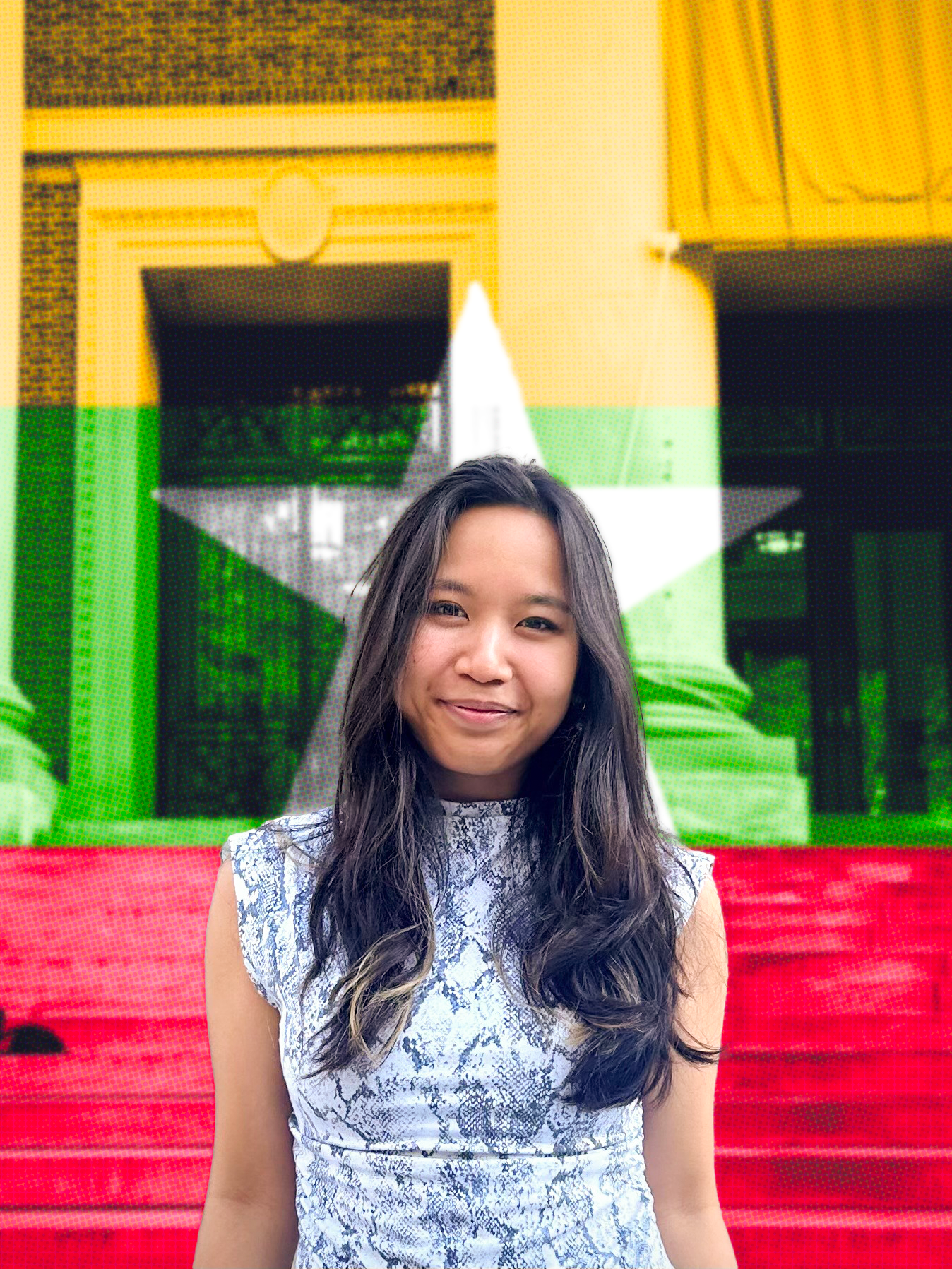
This question resonates at the forefront of my mind, a product of impending graduations and the abundance of opportunity ahead. The search for an answer has become instinctive, accompanied by my considerations of friends, family, and future. But my version of these struggles is intertwined with my background as an international student from Myanmar. My decisions are shaped by my love for a home I fled under duress at 14; my last night there was spent packing my life into a single 50-pound suitcase. With each new tragedy — each frantic call from home — the familiarity I once knew feels a lifetime away, my childhood memories eroded by present realities and rendered unreachable under the U.S. visa ban. My heart yearns for a home I remember as breathtaking, alive with kind, hardworking people and landscapes untouched in their natural beauty. Reality stands in stark opposition to this vision. It is scarred by nightmares my peers can scarcely imagine — the most prominent being the 2017 Rohingya genocide, the 2021 coup d’état, and the 2025 earthquake of 7.7 magnitude — all unfolding alongside the escalation of the world’s longest-running civil war.
Against this backdrop, attaining an American education as one of Harvard’s few Myanmar citizens has been an immense privilege and a rare accomplishment for my family. Therefore, my answer to “What’s next after college?” carries a responsibility born from their sacrifices: my grandmother’s one-way ticket to Myanmar, my parents’ lifetime of work and unending support, and my community’s rebuilding of their homes and livelihoods under authoritarianism. It carries a resolve to reclaim my home and its development — a mission that feels urgent, daunting, and almost impossible to grasp. I am bound to repay and rebuild through whatever comes next for me: a seemingly mutually exclusive choice between personal development in the United States and meaningful contributions to the betterment of my home. To stay is to cede my family and friends indefinitely; to leave is to forfeit professional opportunity and the hope for return.
This choice grows heavier with each major tragedy, each a reminder of the unrelenting need that exists back home. For me, the latest was the earthquake killing thousands, including my aunt — a head nun, educator, and leader at a Buddhist monastery. In my grief, I joined others in organizing fundraising efforts, taking the helm in efforts across time zones to send aid to a country that is too often forgotten by the rest of the world. We joined hands with our peers — who were just as impassioned — writing pleas for donations and moving supplies before Myanmar’s roads closed. But as with every campaign, donations faded and the interest waned, leaving behind only grief to stagnate until the next crisis.
The aftermath followed me to school. I sent emails to professors explaining “personal circumstances,” haunted by a thankless struggle each morning. My laughter in the dining hall rang empty, concealing a grief that my friends knew little about. The motions of daily life feel inseparable from the struggle for stability and restitution. In truth, therefore, I do not know how to answer “What’s next after college?” because it is a moral imperative I cannot untangle from, a refrain echoed by many in our generation and on our campus. I am weary of tragedy but am tethered to it. Weary of headlines that never seem to change. Weary of explaining my “personal circumstances” with every new situation. In these moments, the choice between pursuing personal advancement and dedicated service can feel mutually defeating . One path: hollow. The other: powerless.
As I struggle with this question, I feel impossibly human. I am an international student driven by passions and dreams, grieving my country, my people, and the years I spend away as my little cousins grow tall and my dogs grow old. I am also a college student, searching for next steps within a world of turbulent economic outlook. I cycle between different job and graduate school applications, second-guessing my decisions between coffee chats and advising meetings. Life often feels insurmountable.
Yet, I take comfort in knowing this struggle is not mine alone. Many of my peers, despite our different paths and purposes, carry the same mix of doubt and determination. They are impassioned and impossibly driven, carrying forth unfinished sacrifices and wounds of decades-long conflicts from those before us. On campus, others seem to have an endless capacity to mobilize for what they believe is right — from organizing climate change panels to leading teach-ins on feminism — pressing on when others cannot. But they are not just activists or students — they are also friends. Together, we trade lessons and resources, learning to navigate a world none of us have fully figured out. We share culture and traditions, our spaces often emulating a home of dried mango, Maggi packets, and flowers. In these moments, I grow alongside my peers, not only as a student but as a person, hoping the growth and personal development we build here will one day help me contribute to the development of countries like my own.
So, “What’s next after college?”
I honestly do not know. I am still learning to live in this uncertainty, my answers anchored by community, by memory, and by a stubborn hope for what is still to come. Perhaps I will go home to work on education in rural communities. Perhaps I will enter the corporate world, chasing ambition in the heart of Manhattan. Perhaps, one day, I will have found myself in both. Certainly, this breadth of possibility is not a shortcoming, but a step forward — one that will help translate my values and beliefs into a future of my choosing.
For now, that is enough to carry me forth.