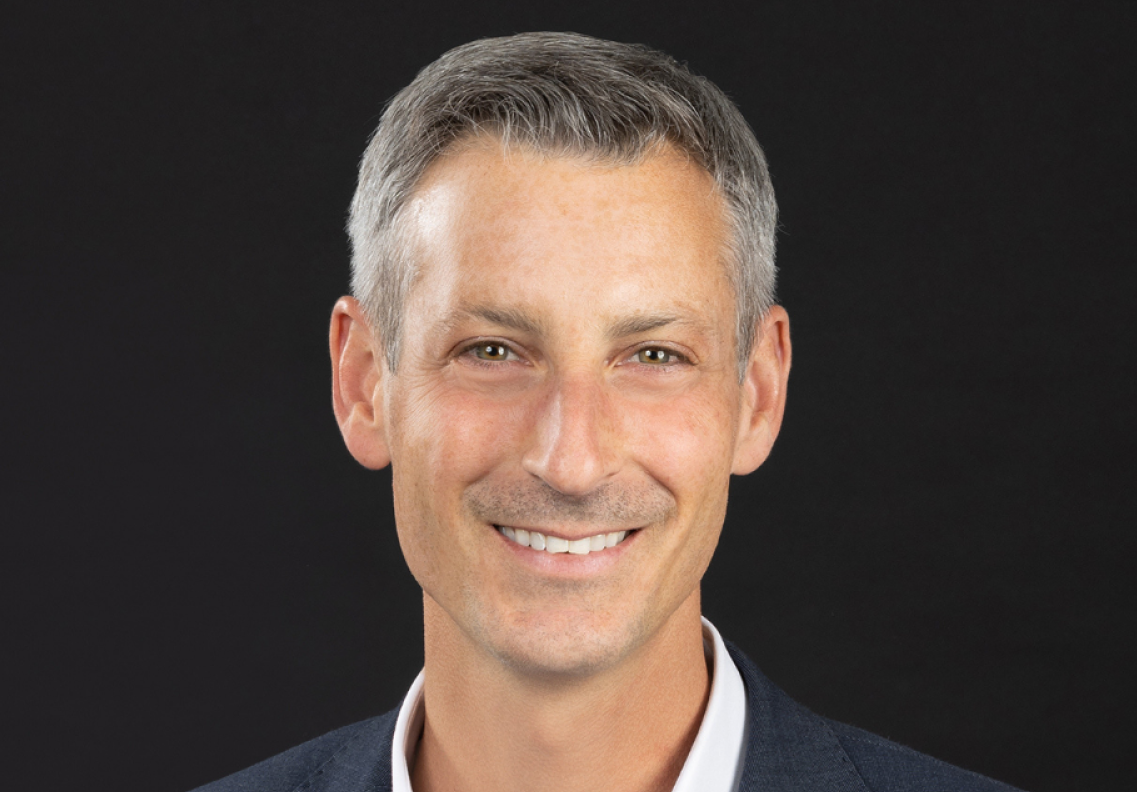
Ned Price served as deputy to the U.S. Representative to the United Nations from 2021 to 2025, engaging in critical policy and strategy discussions in the Situation Room while liaising diplomatically with delegates from other countries. Previously, Price served as spokesperson for the U.S. Department of State and the National Security Council as well as Senior Advisor to Secretary of State Anthony Blinken. Price joined the Harvard Political Review to discuss the importance of public messaging and transparency, balancing personal beliefs and administration priorities, and the state of American foreign policy.
This interview has been edited for length and clarity.
Harvard Political Review: You were at the CIA for nearly 10 years, but most recently you’ve worked at the National Security Council, Department of State, and United Nations. How have your past experiences informed your perspective on foreign policy and diplomacy, and how do you balance transparency and accountability in an intelligence agency of a democratic country?
Ned Price: My career has really been at the nexus of those very issues, especially the past 10 where I’ve moved from the purely analytic or policy roles into roles that combined communications, messaging, and policy analysis. It is a very difficult region in which to operate; there is no hard and fast rulebook when balancing the need to have an informed citizenry intersects with the very real obligations policymakers have to US national security. There’s no single authority on these issues beyond the Constitution, and you probably won’t be surprised to hear that the Constitution doesn’t have anything to say on warrantless surveillance, or the use of drones overseas, or how to differentiate reporters from the agents of a foreign government.
HPR: In your positions at the State Department and NSC, you served as spokesperson. How do you approach crafting responses or statements on emotional or controversial issues that may go against public sentiment?
NP: There are parts of the government that are highly and deeply responsive to public sentiment. When you’re at the White House and you’re speaking on a domestic issue, all of those statements are going to be informed by the political discourse and political imperatives. Foreign policy is a realm that is much less responsive to domestic politics. For that reason, when we were at the State Department, we wouldn’t say to ourselves, “What should we say on the basis of what the American people want to hear?” It was always a conversation about what is in America’s interests, and how do we explain what we’re doing in the context of those interests?
Much of my job was helping balance different perspectives within the building and craft a message that was accurate in terms of what we were doing, but also could make sense to the layperson. The department, when left to its own devices, is not very good at that. You have such deep experts and people who assume that the average person is going to know the geopolitical context, the legal issues, and everything else. One of the things that we tried to do, and obviously we could always do better, as I started to say, is “make foreign policy less foreign.” To explain when we respond and how that’s good for the American people, why that’s good for the United States. That was really the goal, whether it was a statement or briefings every day, talking to reporters. Sometimes we got it right, a lot of times we didn’t.
I’ve been critical of the Trump administration in a number of ways. I think one thing that they’ve done effectively is to really make the argument that we tried to make, that our foreign policy, first and foremost, is predicated on what makes the American people safer, more secure, more prosperous, healthier. If you look back at the first speech that the Secretary of State Blinken gave in the spring of 2021, we called it a “foreign policy for the American people,” and the campaign was called a “foreign policy for the middle class.” That stark dividing line that once was between foreign policy and domestic policy it’s blurry, if it exists at all anymore.
I don’t think we did a consistent and certainly not an effective job at making that case. The Trump administration has, I think, made that case effectively: America first, it’s sort of their mantra. They have been ruthlessly consistent in terms of telling the American people that our foreign policy is based first and foremost on what’s good for the American people. That’s what they’re saying, but I’m not convinced that’s what they’re doing.
HPR: Having worked under several administrations with varying policies at the federal level and at the UN, how do you navigate your personal ethics when they may not entirely align with the organization’s or nation’s position? For example, when did you know it was time to step back from the federal government in 2017?
NP: There is always going to have to be a matter of personal reflection and introspection. I started my career in government in 2006, when George W. Bush was president. I wasn’t overly political in college. I think I always identified as sort of more left of center, but when I went to work for the CIA in 2006, my own personal politics were irrelevant. I went to work on counterterrorism, and it was just a few years removed from 9/11. I felt that drive to serve my country as so many of my peers did. I did not agree with everything the Bush Administration was doing, but I felt that by and large, these were good people who were trying to do the right thing, even if the administration didn’t always get it right. I could say the same thing about the Obama and Biden administrations. I certainly agreed with more of what they were trying to do and how they were trying to do it.
What makes the distinction between having discrete, tactical disagreements and having profound differences of opinion that preclude continuing service is the single question, “Is there an inclusive process that is weighing the issues thoroughly and fully and giving the arguments the consideration they deserve?”
When I disagreed with an opinion that emanated from the Obama or the Biden administrations, I always knew that those decisions were made on the basis of what the individuals around the table, whether I was there or not, thought was in America’s interests and consistent with American values. I didn’t think that when I weighed what to do in the very early days of the first Trump administration, and as I watched then-candidate Trump in 2016 speak about his plans and his intentions.
When people ask me, “Should I go into government? How do I know when to leave?” My answer is always, you’re going to have to come to that conclusion yourself. But the guidance I would offer is to define your red lines before you cross them. If you’re in a government job and you are constantly under pressure to violate your own sense of integrity, your own principles, it’s going to be much harder at that moment to know when the frog is fully boiled.
HPR: Given your experience at the UN, State Department, and CIA, what is your perspective on the current state of foreign policy and where the country should look next?
NP: I don’t know that the United States has a coherent foreign policy at the moment. Much of what this administration purports to be foreign policy is domestic politics masquerading as a foreign policy. I think the result is an America that is far too often disengaged in the world, an America that is far too often abdicating what is ultimately profoundly in our interests and what was manifestly consistent with our values, which by and large seem to be absent from the equation.
It’s really hard to critique this administration’s strategy on the world stage because it’s hard to identify a strategy, and certainly a strategy that could be charitably described as a foreign policy. There is an urgency to trying to explain that to the American people. At the same time, there also has to be a recognition that there is a flashing red light from the American people, that the American people aren’t looking for the status quo to continue.
One of the mistakes that we made in the Biden administration was relying far too much on this idea of building back. I think this is a moment where we have to recognize that the American people are open to, if not eager for, really shaking things up in terms of what America is doing in the world and how we’re doing it, what we’re prioritizing. Some of that is the result of misinformation and disinformation, but some of that is the result of a real recognition that just because we’ve done something since the end of World War II doesn’t mean we should do it the same way in 2025 or 2028 or 2029.
The challenge we have over the next few years is to try to identify what America’s core interests are in the world, and what it is that America needs to continue to do to serve the American people on the world stage. What are the practices that may be antiquated, the areas that we can and should emphasize less, and the areas that we need to emphasize more?
The post-World War II era, in which we wrote the rules of the road for how countries should conduct themselves around the world. Many of those rules still apply and are still valid. That doesn’t mean that America should be doing the same things in the same way that we might have done them 50 years ago or 60 years ago. The task now is to try to identify and craft a foreign policy that is appropriate for, thinking realistically in 2029, being able to confront the traditional peace and security challenges layered with the technological challenges presented by AI and emerging technologies, with a recognition that part of our foreign policy, too, has to be about seizing opportunities. It’s trying to find ways to deliver, in perhaps new and novel ways, additional prosperity, security, and safety for the American people.
A lot of that will come from what we do here at home, but some of that, too, will come from the foreign policy that we have. What we do here at home has a bearing on what we do and what we’re able to do around the world, and vice versa, and how these two realms intersect. How can we build a domestic agenda that is reinforcing our foreign policy agenda? How can our foreign policy agenda reinforce a domestic agenda that has at its core the interests of the American people, the interests of the middle class? How can we grow prosperity while continuing to provide safety and security to the American people?
HPR: What is a moment in your career that you are particularly proud of, and what is one that you would go about differently if given the opportunity to now?
NP: The challenge with foreign policy is that so often, your good days and your bad days are measured by bad things. A good day is when a bad thing is prevented. A bad day is when a bad thing happens that, for whatever reason, wasn’t prevented. It’s very rare that you have the opportunity to do something that is manifestly good in the interest of the American people.
When I started at the White House National Security Council in 2014, Ebola started to reemerge in high numbers in countries in West Africa, and there were concerns that this could lead to a full-on epidemic and potentially a pandemic.
It’s one of those instances where you see the sort of direct line from American action to catastrophe that is productive, and through the deployment and appropriate use of American assistance and disaster response, we were able to help these countries staunch the outbreak of Ebola. It cost far fewer lives than were predicted in the region. There was only one death of Ebola in the United States, even though there were several infections here in the United States as well.
Over the longer term, this investment has led to more resilient health systems in parts of Africa, including West Africa. It’s one of those instances where you see directly the good that America and the rest of the world can do when America is active, when we’re engaged in a way that no other country around the world could do. There was no other country that could have jumped in the way the United States did and achieved the results that the United States did, with the host country and with our partners in Europe. It’s one of those few times where you look back and think to yourself about the thousands of lives that we saved in that epidemic and the countless lives that we saved going forward because of the more resilient health systems supported by the United States.

Publisher