
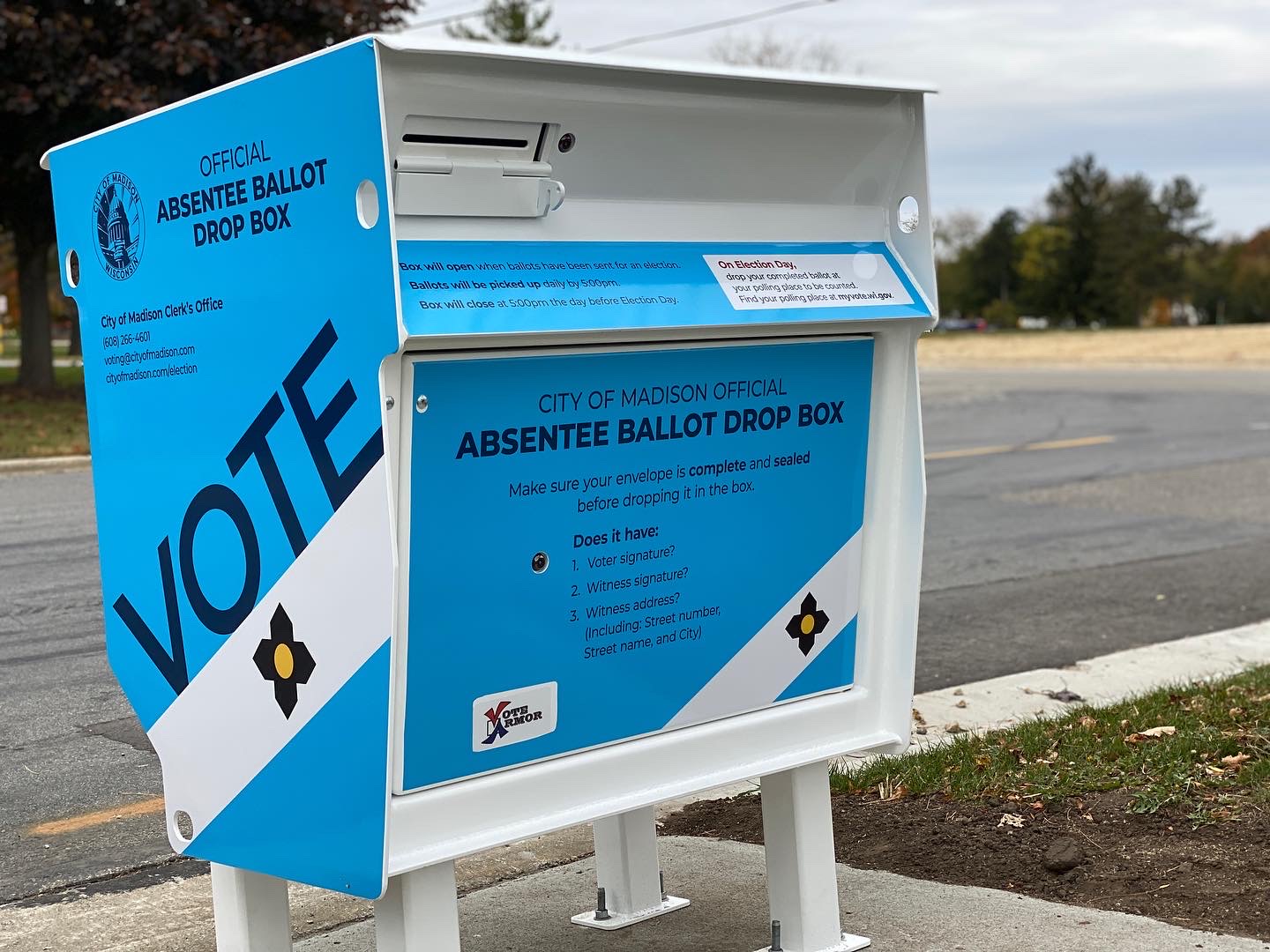
While voter turnout from the 2020 and 2024 elections eclipsed turnout rates since 1960, the United States still struggles with low voting participation rates compared to peer democratic countries.
As countries across the globe, like Sweden, Turkey, and Peru, see turnout rates above 80%, the U.S. often hovers around 60% for presidential elections and even lower for midterms and off-cycle local elections. In fact, U.S. voter turnout remains below average among members of the OECD, a grouping of high-income countries across the globe. Low voter turnout isn’t just a sign of public disengagement; rather, it actively distorts the democratic process by giving disproportionate influence to smaller, less representative segments of the population. This gap undermines the legitimacy of government policies and exacerbates inequality in decision-making.
In fact, turnout for local elections often plummets below 30%, and in some local elections, it can dip into the single digits. This persistent low voter turnout in non-federal elections raises the question: Why are we seeing such a trend, and how can we address it?
The answer to this question is complex, but a significant contributor is the overwhelming focus on federal politics in media and public discourse, which often leaves state and local elections overlooked and undervalued. Although the presidency and federal government dominate headlines, state and local governments arguably wield the greatest influence over Americans’ daily lives, determining the quality of schools, the safety of communities, and the reliability of essential infrastructure.
Ignoring them is ignoring the policies that impact your daily life the most.
Turning Federal Policy into Local Change
Even though the federal government plays a key role in allocating resources through policy, the state and local governments often transform these initiatives into meaningful, on-the-ground change for communities. During the COVID-19 pandemic, collaboration between all levels of government was essential to distribute over $335 billion in federal aid effectively, ensuring local communities received the healthcare, infrastructure, and economic support they urgently needed.
In an interview with The Harvard Political Review, New Jersey Congressman Jeff Van Drew highlighted the tangible outcomes of his securing over $1 billion in federal funds for South Jersey infrastructure, public safety, and economic development:
“So Fortescue, working with our partners at the local level, county level, we were actually able to help them to get a sewer system […] When you look at Atlantic City, we obtained money for cameras to control crime and enable law enforcement to learn how to utilize them.”
Even with the drastic innate differences between these two towns in South Jersey, the grants provided by the federal government enabled lower levels of government to improve their communities and address some of their most crucial issues.
Now, the largely rural town of Fortescue could see new business development and economic activity, as antiquated septic tanks are replaced with a new sewer system. Similarly, Atlantic City took one step closer to becoming a safer urban community by supporting law enforcement.
Local and State-Funded Education: Ensuring Fairness and Equity
A recurring theme throughout these improvements is the necessity of collaboration amongst the levels of government to solve the issues at hand. This symbiotic relationship is further highlighted when looking at education within New Jersey and the funding formula that determines the budget allocated to each school district. In an interview with the HPR, Kingsway Regional School District Superintendent Dr. James Lavender illustrated the significance of equitable state funding in providing a thriving educational system throughout New Jersey.
He explained, “The former school funding formula stifled us because we were growing, and we had no funding to support our school. But as the money came, we developed new programs, our Business and Leadership Academy, our ROTC programs, and the list goes on and on.”
New Jersey’s School Funding Reform Act of 2008 (SFRA) marked a pivotal shift in the state’s approach to education funding, aiming to ensure a fairer distribution of resources. Prior to SFRA, the funding formula often failed to accommodate growing student populations and varied needs, leaving expanding districts like Kingsway Regional struggling with inadequate support. SFRA corrected this by linking funding more closely to actual student needs and district characteristics, including growth.
The School Funding Fairness Act 2015 aimed to minimize funding inequality and further ensured that the available funds keep pace with high poverty levels and rapid growth that some districts experience. Building on previous success, the School Funding Law of 2018 made adjustments by adding provisions such as slowly incorporating more money for those underfunded districts. Governor Phil Murphy’s reform proposal for 2018-2019 sought to improve this formula’s alignment with student demographics and needs at present.
Unlike the previous education funding model, which often left growing districts underfunded and struggling to meet their students’ needs, the SFRA and following legislation allowed for more tailored, local solutions by adjusting funding formulas to reflect specific district needs, such as student population growth and poverty levels.
Local Government Dynamics: Balancing Community Needs and Resources
Local governments also play a role at the grassroots level to ensure that citizens’ basic needs and facilities are met. Depending on the specific city or town, these local governments can shape areas based on various factors such as business development, budget allocation, infrastructure, taxes, community projects, and public services.
In an interview with the HPR, Woolwich, N.J. Mayor Natalie Mathias spoke on her future vision and goals for the township. She painted a picture of the feasibility and tangible impact that local governments can have to foster community well-being.
Mathias has had the difficult task of balancing business and residential development in her community, “a big difference between having a business which is rateable, that brings money into the community, and then having residential, which also brings in money, but is offset by the increased cost of municipal services.”
While business developments bring revenue, many residents oppose commercial development in certain places they deem unfit, such as areas close to residential neighborhoods or locations that could disrupt the community’s aesthetic or environmental quality.
Whether that be building a warehouse or a mall in a community, these developments could be harmful to the residents’ desires. Mayor Mathias has taken just this sentiment into account, proposing to bring in businesses to a non-residential area: U.S Route 322. By capitalizing on this opportunity strategically, investment can come into the community while also ensuring local residents are content.
Once again, the foundational principles of communication and collaboration drive local governance across the United States to improve their communities.
Speaking with the HPR, Gloucester County Commissioner Joan Gattinelli went in-depth about her former role as mayor of Washington Township, where she spearheaded a major economic development agenda that has brought in hundreds of new businesses into the community, delivered five budgets with no municipal tax increase, and implemented the Washington Township Saves Lives program, a partnership with Uber and local businesses that provides free rides home from alcohol-serving establishments to reduce drunk driving.
Her success, as she navigated the challenges of the pandemic, was not just a matter of strategic planning but also of maintaining crucial connections with the community:
“Even during the pandemic, we had direct contact with our businesses all the time. We had Zoom calls. We checked in with them. We wanted to make sure that they had the support that they needed. We helped them find money, small business loans, and grants.”
The pandemic proved detrimental to businesses, forcing many to shut down or suffer significant losses. By serving as a helping hand to these local small businesses, Commissioner Gattinelli was able to have an impact not only on the individual business owners but also contribute to overcoming the pandemic on a broader national scale. The ability to communicate and collaborate with businesses within her community and outside entities enabled Washington Township to recover phenomenally.
Aside from collaboration, local governments are also limited within the confines of a budget to provide the local community with necessary resources, facilities, and services. Given that these localities are already facing a plethora of responsibilities with little tax funds to do so, grants from federal and state governments are a strategic and necessary way for them to prosper and benefit their communities.
In an interview with the HPR, Woolwich Councilman Craig Frederick provided substantial insight into the practicality of local governance and how it works with the other levels of government to thrive.
He details how these joint efforts materialize into practical community benefits, explaining, “say, a developer wants to contribute to pickleball courts that we created and was then 100% paid by a developer… then worked with the state, from roads that we believe are the worst within the town, bike paths, and the creation of Multi Purpose fields and softball fields.”
The Councilman played a pivotal role in ensuring that the town’s budget was fiscally responsible, while still being able to offer new public works and better the town’s infrastructure without costing the taxpayer a penny. While this isn’t an easy feat, when done properly, local governments are able to get things done for their communities. From public safety with law enforcement and fire departments to infrastructure and recreation, all of these vital attributes contribute to a surging community.
Future Prospects: Overcoming Challenges and Optimizing Government Efficiency
Federal, state, and local governments play vital roles in shaping our lives, but they are not without challenges. Obsolete systems and bureaucratic red tape frequently hinder the effective implementation of government policies. Additionally, disparities in resource allocation can lead to uneven development, whereby some communities flourish while others lag behind.
The interviews unveiled several viewpoints on how to address these problems. For example, Rep. Van Drew underscored adaptability as the key to addressing diverse community needs while Superintendent Lavender emphasized equity funding formulas for education.
Looking ahead, there are exciting possibilities for optimizing governmental efficiency and community involvement. Bureaucratic inefficiencies could be dealt with through the use of technology, which would bring about transparency and streamlined processes. It is also possible that more public-private partnerships may be formed or community-driven initiatives that will foster localized solutions to specific problems. Future reforms might also focus on bridging the gap between different levels of government to ensure more cohesive and effective policy execution.
Increasing voter participation at all levels of government is an important step towards addressing these challenges, especially at the levels of government closest to the people. Understanding and engaging in not only federal elections, but also state and local elections will directly empower individuals to influence the policies that affect their communities.
It is imperative to note that voting is not just a right, but also an embodiment of exercising citizenship at all levels of governance, driving positive change, and enhancing democracy further.
The next time you head to the polls, remember this: it’s not only who sits in the White House that matters, but who shapes your streets, schools, and sidewalks. State and local governments aren’t just where policy is implemented — they’re where change begins.