

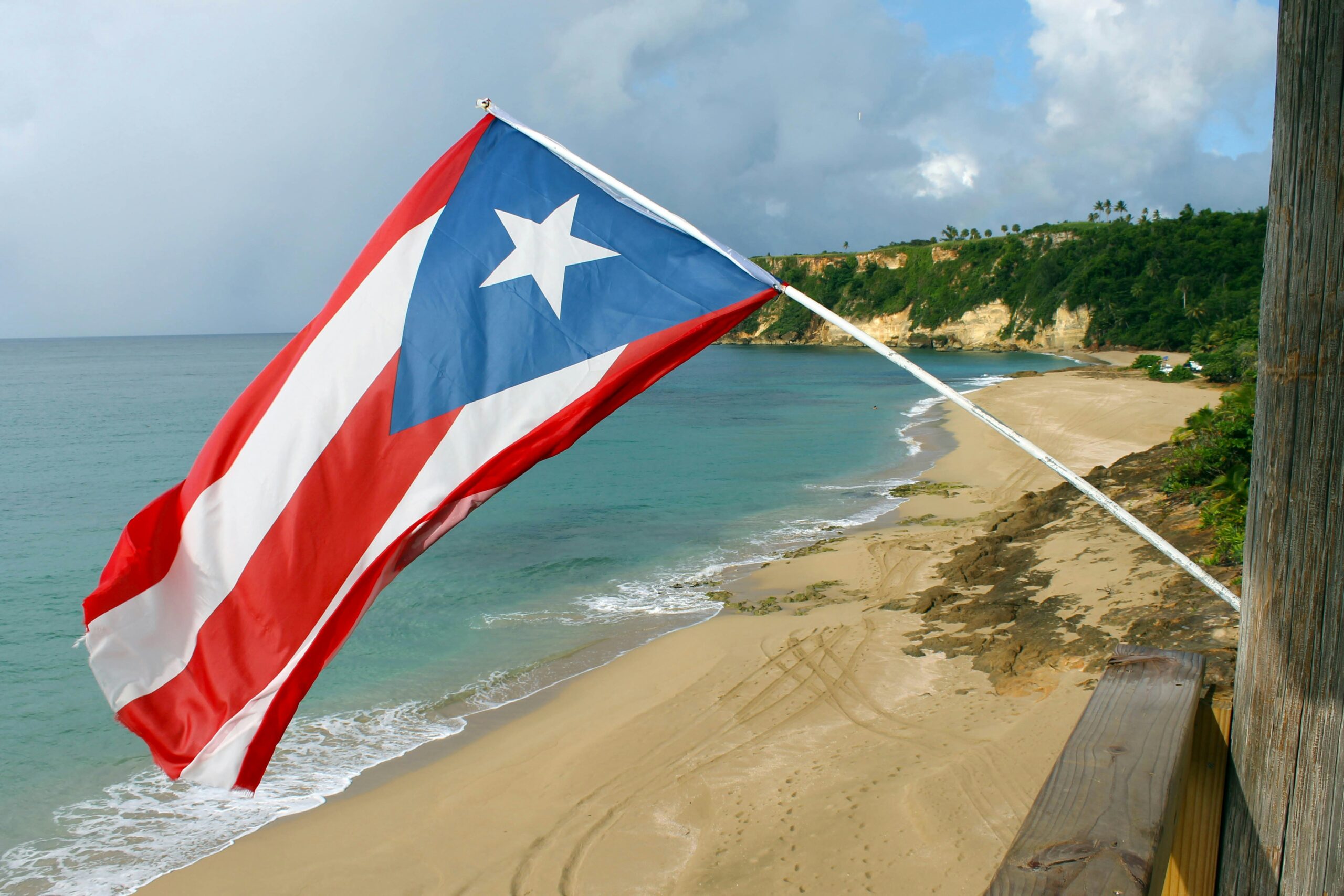
The Trump Administration’s disruption of the global trade order has thrust Puerto Rico into a new landscape of both risk and opportunity. With its strong manufacturing base and strategic position within the United States federal framework, the island appears poised to benefit from a wave of nearshoring and protectionist policies. Yet, beneath the surface, longstanding structural challenges, from energy instability to bureaucratic inefficiencies, continue to threaten the extent to which Puerto Rico can adapt and capitalize on the potential gains of the emerging protectionist era.
A Brief Context on the Puerto Rican Economy
Section 936 — a provision in the U.S. tax code established in 1976 — exempted U.S. companies from federal income tax on profits earned in Puerto Rico and other U.S. territories. The benefits accorded by Section 936 spurred a surge in Puerto Rico’s manufacturing sector, particularly in the pharmaceutical, petrochemical, and technology industries. The ensuing influx of billions of dollars in corporate income dramatically expanded the Puerto Rican economy. By the early 1990s, however, the tax break had become increasingly unpopular amidst attacks likening the policy to corporate welfare. Section 936’s growing unpopularity in Washington, D.C., culminated in the Small Business Job Protection Act. Signed by President Clinton in 1996, this law initiated a phase-out of the tax exemption over a 10-year period.
What ensued was an economic catastrophe. The elimination of Section 936 had a significant effect on local employment and industry investment. According to a study conducted by Duke University economist and research associate Juan Carlos Suárez Serrato, “for each person laid off from a firm affected by the tax credit repeal in a county with an average level of Section 936 exposure, the county lost an additional 3.6 jobs.” The study found concurrent declines in wage growth, housing prices, and employment.
The effects of the repeal of Section 936, combined with factors including the Great Recession, Puerto Rico’s historic 74-billion-dollar public debt crisis, and the devastating effects of Hurricane María, among other events, led to “a lost decade” of economic growth. In 2006, the same year Section 936 was fully repealed, Puerto Rico entered a prolonged 11-year recession, during which the economy contracted by 10%, the island lost 10% of its population, and unemployment surged, reaching nearly 15% in 2014. Manufacturing employment fell from 159,000 in 1995 to 74,000 in 2016. Investment as a percentage of GDP declined from 20.7% of GDP in 1999 to just 8.25% in 2016. Although far from the sole factor, Puerto Rico’s economy suffered greatly from its over-reliance on external investment through Section 936’s tax incentives. This event serves as a cautionary tale against relying heavily on an unstable and easily retractable economic regime.
Today, Puerto Rico’s economic decline has moderated. Although many challenges remain, the island’s unemployment rate is at a near-historic low of 5.3%, manufacturing employment has improved slightly to 82,600, its public debt has been restructured, and the economy has experienced positive GDP growth in the last three years of measured data.
Tariffs: A Gift or a Curse?
At first glance, it might seem that Puerto Rico stands to benefit from an increasingly protectionist U.S. trade policy. Manufacturing accounts for 46% of the island’s GDP, and in 2023 alone, Puerto Rico had $61.2 billion in manufacturing exports. Additionally, given that median wages on the island are 60% of the U.S.’s median wages, companies seeking to onshore production enjoy comparative benefits in Puerto Rico. However, a closer examination paints a hazier picture of tariffs’ effects on the Puerto Rican economy.
According to the U.S. Bureau of Labor Statistics, Puerto Rico’s pharmaceutical and medicine manufacturing exports reached $20.2 billion in 2024, which comprises 17.6% of total U.S. pharmaceutical exports. This makes Puerto Rico a critical hub for American pharmaceutical production. The Trump Administration’s repeated, recent threats to impose 25% tariffs on pharmaceuticals may inflict significant harm on Puerto Rico’s domestic industry if not carefully executed. According to a report by Ernst & Young (EY), tariffs of these proportions would increase U.S. drug costs by nearly $51 billion annually, raising U.S. prices by as much as 12.9% if passed on to consumers. These higher production costs would significantly reduce American competitiveness in the industry and put pressure on Puerto Rico’s significant pharmaceutical exports.
Amid these risks, Puerto Rican officials are working to position the island as an attractive destination to the United States’ reshoring ambitions. In an interview with the HPR, Resident Commissioner Pablo José Hernández Rivera — Puerto Rico’s sole representative in Washington, D.C. — has told members of Congress that “Puerto Rico is uniquely positioned to help the U.S. in its nearshoring and reshoring efforts because of its long history with the pharmaceutical and manufacturing industries[…] Puerto Rico –– because it is not a state –– has unique tax advantages while, at the same time, being under U.S. sovereignty enjoys the protections and the legal benefits that companies in the U.S. have.” Puerto Rico’s success in a protectionist world hinges on its ability to attract external companies seeking to reshore production within the United States.
Beyond Manufacturing
This unique opportunity, however, comes at a time when Puerto Rico’s infrastructure is inadequately equipped to support the increased demand from a potential manufacturing expansion. Following years of insufficient maintenance and historical fragility because of events like Hurricane María, the island’s energy grid now faces a concerning 700–850 megawatt energy generation deficit. Consequently, LUMA, the private utility company that oversees the transmission and distribution of Puerto Rico’s power, projects that the island will face 125 selective blackouts over the next six months.
The impending energy crisis has raised alarms among Puerto Rico’s local and federal representatives. In an interview with the HPR, Representative Héctor Ferrer Santiago, Minority Leader for the Popular Democratic Party in the House of Representatives of Puerto Rico, warned that “attracting manufacturing will be very complicated. If [a firm] wants to invest in Puerto Rico, for the next couple of years they will have to bring their own energy generation, as the island lacks the necessary energy to accommodate additional manufacturing.” Citing its drag on both economic growth and quality of life, Ferrer described the island’s faltering energy grid as “one of our country’s largest problems.”
Resident Commissioner Pablo José Hernández Rivera stressed that reconstruction efforts depend largely on local execution: “The federal government is aware of the energy crisis, and it has assigned billions of dollars for the energy grid’s reconstruction. However, most of the responsibility falls on the local government and the private utility companies that are in charge of administering Puerto Rico’s energy grid, and what the federal government can do is increase oversight and accelerate the permit review process for a lot of the reconstruction work that is pending.”
Indeed, the federal permitting process has significantly delayed the deployment of the $20 billion assigned by Congress to rebuild the island’s grid following Hurricane Maria. During Trump’s first term, his administration repeatedly stalled funds, citing corruption and mismanagement concerns. The island’s local government, however, is also to blame. For years, Puerto Rico Electrical Power Authority, the government-owned local utility, has misallocated funds, underinvested in grid maintenance, accumulated billion-dollar debts, and been caught in numerous corruption scandals ––all of which undermine its ability to adequately manage the island’s grid.
The latest energy crisis is a symptom of both the island’s subpar public institutions, and the numerous bureaucratic hurdles in the federal oversight and local deployment process. While many short-term solutions –– from floating power plants and new portable generation units – are currently being explored at the local level, Puerto Rico’s unreliable power grid will continue to restrict economic growth over the coming years.
Puerto Rico’s deficient electrical grid is not its only barrier to economic growth under the emerging protectionist era. José Joaquín Villamil –– Economist and CEO of Estudios Técnicos, Inc. –– cited the island’s high transactional costs as a major setback to growth. In an interview with the HPR, Villamil recalled the laborious process his company endured just to receive a permit to rent an office space: “It was the same zoning, the same use, no new constructions.” It was merely a change of usage rights. “And that took three months, three months and a half.”
This is far from an individual experience. According to the World Bank Doing Business 2020 report for Puerto Rico, registering property on the island takes an average of 190 days, and construction permits require approximately 22 procedures. In contrast, OECD countries average 23.6 days and 12.7 procedures, respectively. “You multiply this by [thousands of] of new businesses […] and you see the huge costs this adds to Puerto Rico,” concluded Villamil.
The Need for Self-Sufficiency
While tariffs could shift some positive attention to Puerto Rico’s manufacturing industries, an influx of external capital contingent on an ever-changing trade environment could again descend Puerto Rico into an unsteady foreign capital-dependency trap. Given the large degree of volatility in the Trump Administration’s tariff policy, the island’s long-term economic vision cannot rely on a role as a manufacturing haven for onshoring American companies. Sustainable development requires robust, local institutions.
In an increasingly protectionist and unstable global economy, Puerto Rico’s future will not be secured solely through external investment or trade shifts. When asked about the path forward for Puerto Rico’s economy, in addition to calling for the continued promotion of foreign investment, Villamil asserted that: “No nation can solely develop through foreign investment […] Stimulating local capital,” he added, “has many advantages. For example, the effects in terms of income, employment, etc., are greater. Local businesses create more jobs; they are more labor-intensive. And additionally, producing for the local market reduces dependence on imports.”
Beyond manufacturing and investment, Puerto Rican leaders have also begun recognizing the need for greater self-sufficiency in critical sectors like food production. Given that Puerto Rico imports approximately 85% of the food it consumes, Representative Héctor Ferrer Santiago introduced legislation at the beginning of the legislative term to establish a comprehensive food security plan and strengthen incentives for Puerto Rican farmers. “This issue takes on even greater significance with Donald Trump’s protectionist public policy,” Ferrer emphasized.
Puerto Rico’s heavy reliance on imported goods also leaves it exposed to volatile external market forces. In the near term, tariffs will almost certainly raise prices for everyday Puerto Ricans and strain already compromised checkbooks. The debate that these policies summon, however, points to much more profound, structural factors at play.
The Puerto Rican economy cannot grow through sheer dependence on the mainland, nor advance without the institutional efficiency and infrastructural reliability necessary to stimulate sustainable investment within the island. Today’s trends should prompt the Puerto Rican conscience to plan beyond the now and develop institutional frameworks to sustain a dynamic economy that empowers the local private sector to invest and compete at home and abroad. Only then will Puerto Rico overcome its dependency trap and fulfill its promise as a resilient economic force within the United States and beyond.