
Furiously pedaling, two men are racing on exercise bikes, sweat dripping down their heads. This intensity, however, is not from a pure motivation to get more fit or a friendly competition. It is a scene depicting the main candidates, Lee Jae-Myung and Kim Moon-Soo, and their live voting percentages in Seoul. In front of concerned South Korean citizens, the months-long 2025 South Korean Snap presidential election culminated in a politically charged last few months of South Korean politics.
As frontrunners of Korea’s two main political parties, the Democratic Party and the People’s Power Party, Lee and Kim were the center of an election that saw split decisions and some of the most aggressive political campaigning the nation has ever seen. The 2025 South Korean presidential election exposed a deepening political polarization, threatening democratic cohesion in South Korea. The Korean political system must work to regain the trust of its people, or else South Korea is in for a long period of political change. For a nation that’s undergone radical changes in government leadership and political parties since its founding, South Korea must remain civil in its ways of corrective democracy.
Election Overview
South Korea has progressively placed itself into the limelight over the last few years. Known internationally as a cultural hotspot and a relatively stable economic nation, the nation has progressively implemented the ideas of free speech over the last 30 years. And yet, the societal turmoil Korea continues to face is a stark contrast compared to its positives.
In December of 2024, South Korea made international headlines when its president, Yoon Suk-Yeol, threatened to impose martial military law. He attempted to seize the authority of the Democratic Party lawmakers of Korea after stating allegations of anti-state, North-Korean dictations against his rival party. Yoon, who represented the Conservative party, faced a problematic uphill battle in passing a sweeping agenda due to the National Assembly having a Democratic majority.
On the night of December 3, he briefly declared martial law — a move that lasted only six hours. Soon, Yoon would be impeached by the Korean court, effectively ending the short political saga. Since his removal, three acting presidents have struggled to manage South Korea’s daily proceedings before the snap election, with each having turbulent ends to their terms — either through impeachments or resignations. The lack of patience and conflicting parliamentary powers have simply not given leaders enough time to settle down before fixing the democratic cracks at hand. Citizens of South Korea hoped that the 2025 presidential election would forge a new, more secure path toward social prosperity.
Looking Back on the Results
Though Lee Jae-Myung would end up winning the election by the concession of Kim just a few hours after polls closed, the results highlighted some interesting statistics, most notably the geographical breakdown of voting. A look at the South Korean election map showed that Lee swept the western regions of Korea while Kim would handily win the right areas of the nation, effectively converting the Democratic left and the Conservative right to a nationwide split. While this trend mirrored the pattern of closely contested elections seen in previous cycles, the level of district-level divide in the nation was unprecedented. Even when Yoon won his presidency in 2022 by just a 0.8% margin, such a pronounced geographic polarization had not occurred, even on the local level.
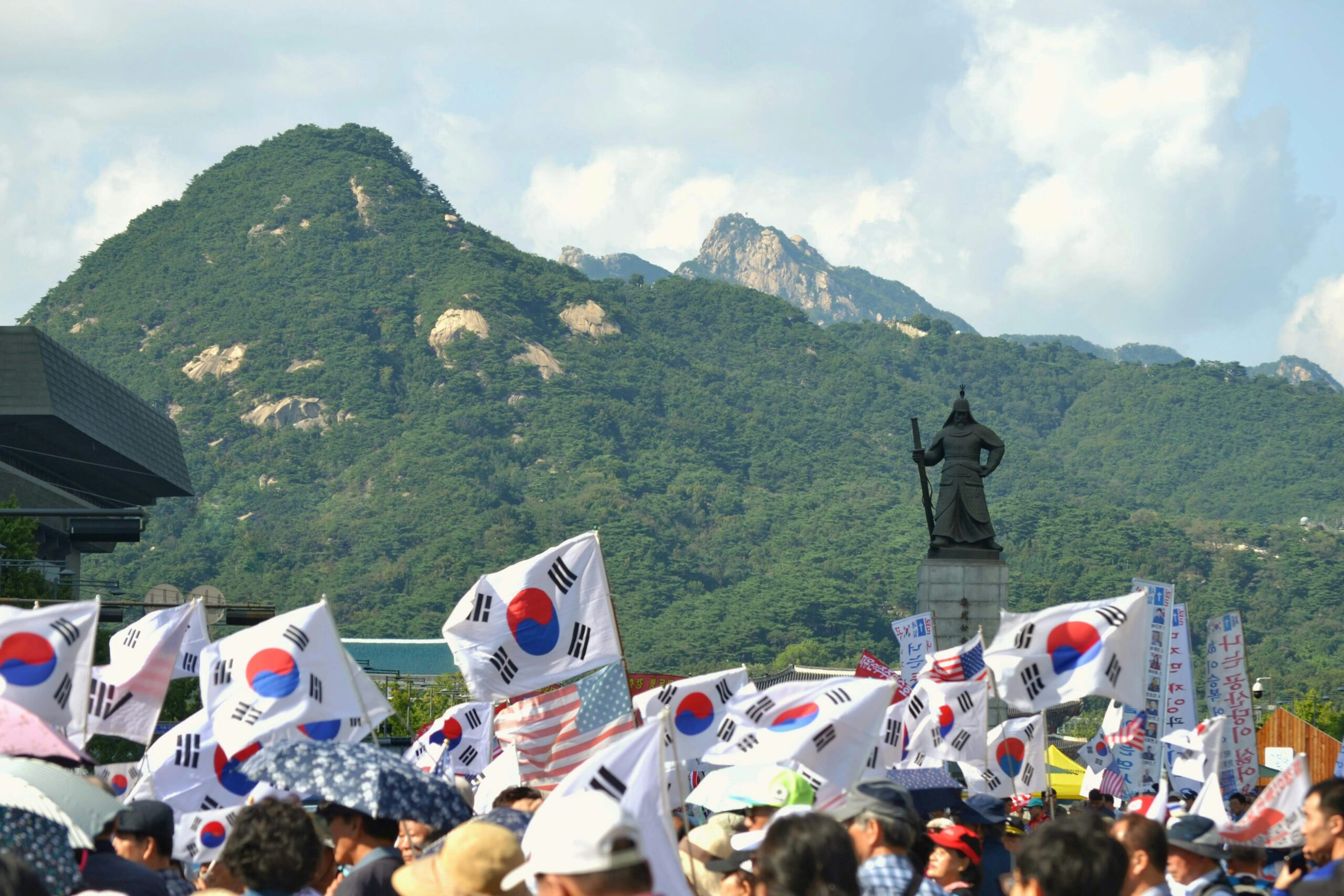
Despite the record-high voter turnout in the 2025 election, confrontational political polarization has sharply escalated in South Korea. A notable difference from previous Korean snap elections is that the 2025 impeachment process contributed to heavy opposition and protests, mainly from women’s rights groups. The repeated controversies on anti-feminism and strict military conscription policies only added to the confusion of democratic processes and repeated breakdowns of public trust. By December 2024, Gallup’s national survey depicted only a 13% approval rate for Yoon. With stark differences in national security and economic outlook between the two parties, the trend between South Korea and American politics is noticeable. From “stop the steal” signs delivered by the far right to the “anti-Yoon” protests of the left, this angle of aggressive, disruptive democracy continues to challenge the norms of peaceful power transition, transitions that are central to democratic governance. The intense polarization promoted by both sides only attacks cooperative trust and decisive bipartisanship.
While the 2025 presidential election’s polarization should serve as a warning for both politicians and citizens, there is renewed optimism as Lee Jae-Myung rises to the office of president. Despite differences with the right on issues such as healthcare and private sector economics, the Democratic Party is notably trying to bring confidence into the nation’s economy through local cash handouts for all families. However, the continual political instability that South Korea faces is a reflection of how lawmakers in the highest positions in the country should work on uplifting the morals and aspects that civilians care about.
South Korea must remain committed to stabilizing the political system that secures the fragile connection between the economy and social living. It is evident that South Korea has battled political misconduct from its top government leaders, ultimately reducing the hard-earned trust that has slowly been built for decades. However, perhaps Lee Jae-Myung will be the progressive figure moving forward who starts the long road back to recovering the confidence that the people of Korea have in not just their government, but even other neighboring citizens. Bipartisanship and argumentative rhetoric may be imbued in all democratic forms of government, but South Korea must try to turn the tables and reduce these imbalances.