America’s founders believed education was a cornerstone of democracy. In fact, it was one of the reasons they felt safe delegating such exceptional powers to the people. As Thomas Jefferson stated: “If we think [the people] not enlightened enough to exercise their control with a wholesome discretion, the remedy is not to take it from them, but to inform their discretion by education.”
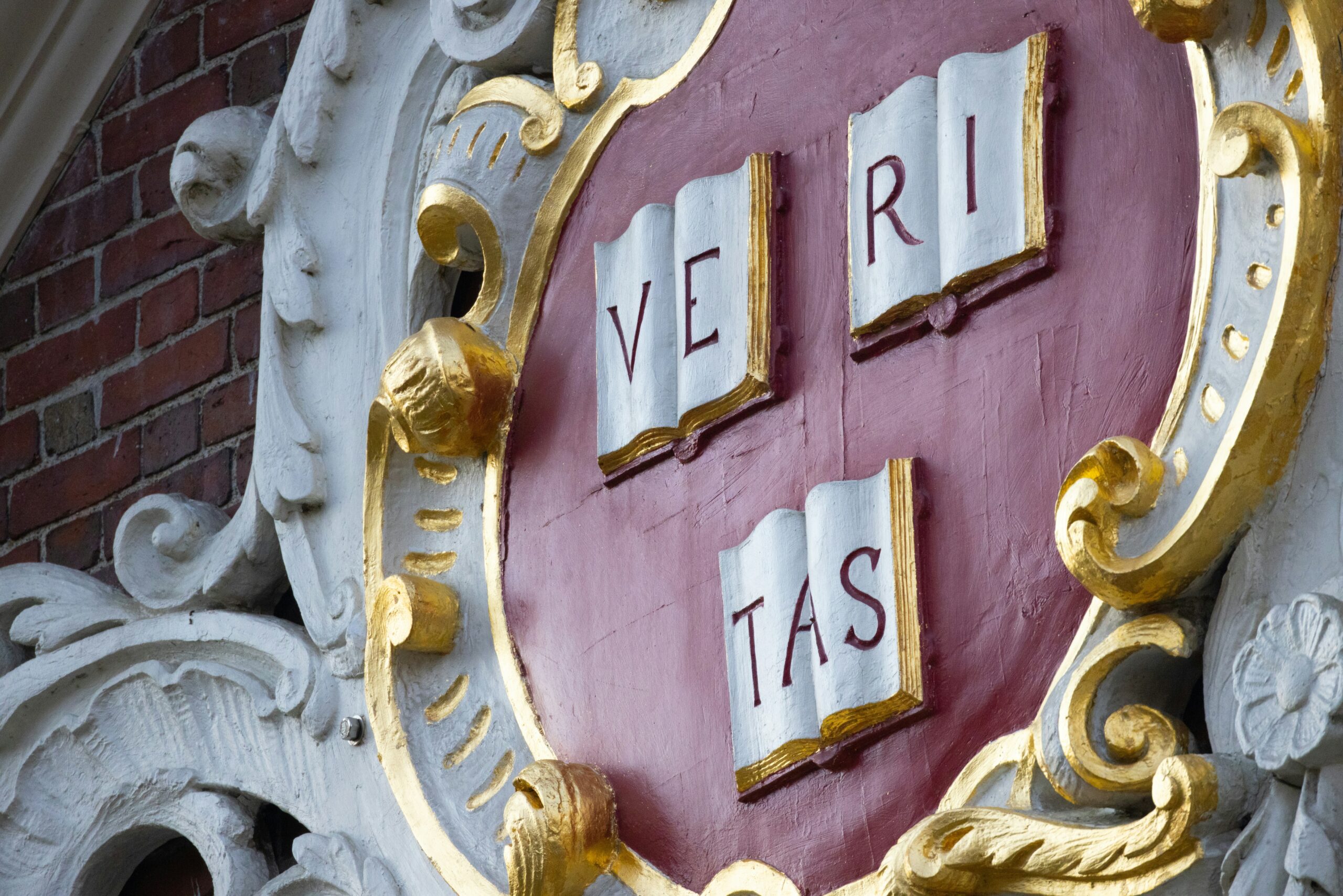
Today, that same value of higher education is being challenged by the Trump administration, with Harvard in particular facing scrutiny.
The executive branch has accused the university of tolerating antisemitism, citing alleged violations of Title VI, a provision of the Civil Rights Act protecting students from discrimination. However, Harvard has insisted it is taking adequate steps to address the issue, including offering new training and implementing further protest rules. Despite these efforts, the Trump administration has demanded that Harvard overhaul hiring and admissions, end DEI programs, and screen international students for sympathies they define as “detrimental to the United States,” among other requirements.
One can point to Cold War-era anti-communist investigations or the less extreme example of Title IX enforcement efforts as instances when the federal government made demands of higher education, as they are now. Although universities have historically faced government scrutiny, those interventions stopped short of dictating the fundamental structure of an entire institution.
Harvard’s president, Alan Garber, believes President Trump’s actions are “perplexing” and has refused to comply with the extensive demands. In response, the administration froze and terminated more than $2.6 billion in federal grants, disqualified the university from receiving certain future federal money, and attempted to ban international students from entering the U.S. to study at Harvard. In the ongoing legal battle, a district court recently ruled in Harvard’s favor, vacating the funding freezes and terminations. However, the turmoil appears far from resolved as the administration has vowed to appeal.
Amid the escalating dispute, some rhetoric from both sides seems hyperbolic. Nevertheless, a close examination of their historical partnership reveals that while the federal government has always had a conditional relationship with universities, its most recent actions are indeed unprecedented and overtly biased.
Beginning in World War II, the government and universities became inextricably linked when MIT dean Vannevar Bush convinced President Franklin D. Roosevelt that universities could be invaluable to furthering national research goals. The federal government, through the newly formed Office of Scientific Research and Development, began funneling millions of dollars to universities as they assisted with defense research, particularly related to the development of the atomic bomb and radar. The new reliance on universities represented a fundamental change in how governmental research was conducted, a model that still exists today.
The federal government’s reliance on universities expanded during the Cold War, when the Soviet Union started developing its satellite capabilities in the ’50s. Government funding to universities rose rapidly, from $13 billion in 1953 to $105 billion by 1990.
This historical practice of universities using federal funds for critical research underscores how important higher education institutions are for furthering America’s goals. The Trump administration’s attempted cancellation of federal funding jeopardizes groundbreaking research into the causes of neurodegenerative diseases, the effectiveness of various educational models, the use of AI for drug discovery, the lingering impacts of the pandemic on mental health, and much more. This research is fundamental to America’s future success as a nation. These funding cuts don’t threaten just a devastating loss for Harvard, but a blow to the ideals of innovation and progress that define the U.S. now and in the future
However, political ideology has always played a role in how the government and universities interact. During the Cold War, amidst the anti-communist hysteria of McCarthyism, professors at private universities across the country were threatened and condemned for political beliefs deemed “un-American.”
The names of Harvard professors and faculty from across the country appeared on lists of suspected communist sympathizers and were submitted to the Senate Internal Security Subcommittee for Investigation. Throughout this time, Harvard strongly asserted the rights of its professors to exercise political independence, invoking the principle of academic freedom.
These dynamics between Washington and private universities during the McCarthy era demonstrate a history of fraught and complicated relationships. As universities and the federal government have become more entwined, the balance between maintaining academic freedom and meeting federal demands has become precarious. While universities like Harvard rely on federal funding to sustain the core of their missions, it has always come with a price. Therefore, the current administration’s rift with higher education may be seen as a continuation of historical patterns.
But the McCarthy era analogy is not perfect. Consider some key differences. For one, President Trump today is accusing entire universities of promoting a singular political ideology, rather than calling out individual professors.
Additionally, during McCarthyism, intrusions on academic freedom were ostensibly related to national security. Although they targeted a certain political ideology, their justification was more tethered to a concrete — albeit exaggerated — government concern.
Today, that message is muddled. While President Trump’s accusations are nominally tied to antisemitism, a broader political vendetta is apparent. As he stated that “Harvard has been hiring almost all woke, Radical Left, idiots and ‘birdbrains’… Harvard is a JOKE… and should no longer receive Federal Funds.”
Moreover, the public climate during the communist purges was somewhat united, at least in the beginning. There was fear, across political party lines, about the presence of communism in the United States. While the decision to investigate professors may have been controversial, the underlying concerns were quite bipartisan. Now, these attacks are almost exclusively partisan, with neither the actions taken nor the stated concerns enjoying broad public consensus and backing.
The government’s actions during McCarthyism have not worn well under history’s scrutiny. While President Trump’s actions should not be portrayed as a parallel to McCarthyism, this fact should not be construed to mean that the administration’s actions are any less extreme. To the contrary, the government’s attacks on Harvard are concerning in new and disturbing ways.
Decades later, Title IX enforcement unveiled a similar strain, revealing the complexities of the relationship between private universities and the federal government. Title IX, part of the Education Amendments of 1972, prohibits discrimination on the basis of sex for any program receiving federal assistance.
In Grove City College v. Bell, a conservative private college argued that they were exempt from Title IX because they did not receive federal funds directly. After refusing to confirm their compliance, the Department of Education countered by threatening to withhold student aid. The U.S. Supreme Court ultimately sided with the federal government in part, upholding the government’s right to use funding as leverage to enforce compliance.
This strategy worked: while some conservative institutions like Grove City left federal aid programs, many others changed their policies to be compliant.
Similarly, the federal government’s attempts to require Harvard “follow” Title VI are not entirely unprecedented. Threatening to withhold federal funding has long been a method of the executive to fulfill its constitutional obligation to enforce laws.
But while the administration claims Harvard violated Title VI, the university has vehemently denied that characterization, citing the lack of relevant factual evidence presented by the government. In fact, in a recent ruling against the administration, Judge Allison Burroughs criticized the government’s allegations of antisemitism as “a smokescreen for a targeted, ideologically-motivated assault on this country’s premier universities.”
This differs from Title IX enforcement, when schools like Grove City often openly refused to enforce the provision. Either way, when a university was not meeting Title IX requirements, the government typically provided a clear path to compliance. Many of the Trump administration’s demands lack an obvious connection to Title VI, such as “reducing the power held by students and untenured faculty,” making this case legally tenuous.
Furthermore, although the federal government has historically threatened to withhold funding, as was the case with Title IX enforcement, it has rarely actually terminated it. President Trump’s abrupt cancellation of $2.6 billion in federal funding to Harvard, without adequate evidence or a coherent path forward, is a disavowal of this traditional government-university symbiosis.
Regardless of what evidence exists that Harvard is violating Title VI, the federal statute outlines several procedural steps before terminating funding, provided it is used only as a last resort. Those requirements were evidently disregarded here. By ignoring proper legal procedure, the administration exposes its bias, further highlighting the extraordinary nature of President Trump’s actions.
Examining the historical relationship between the federal government and higher education offers some perspective on President Trump’s actions. Tensions in this relationship have a precedent in the government overreach during the McCarthy era and previous threats to federal funding for Title IX.
Comparing these as exact historical equivalents is misguided. The executive’s actions today are vindictive, not grounded in evidence, legal standards, or historical norms. This is not just a modern application of prior reasoning, but a radical intervention in higher education. Yes, Trump’s actions echo elements of a strenuous history between universities and the federal government, but they are better understood as a sharp departure. His attacks should be seen not as a continuation of a pattern, but as a rupture.